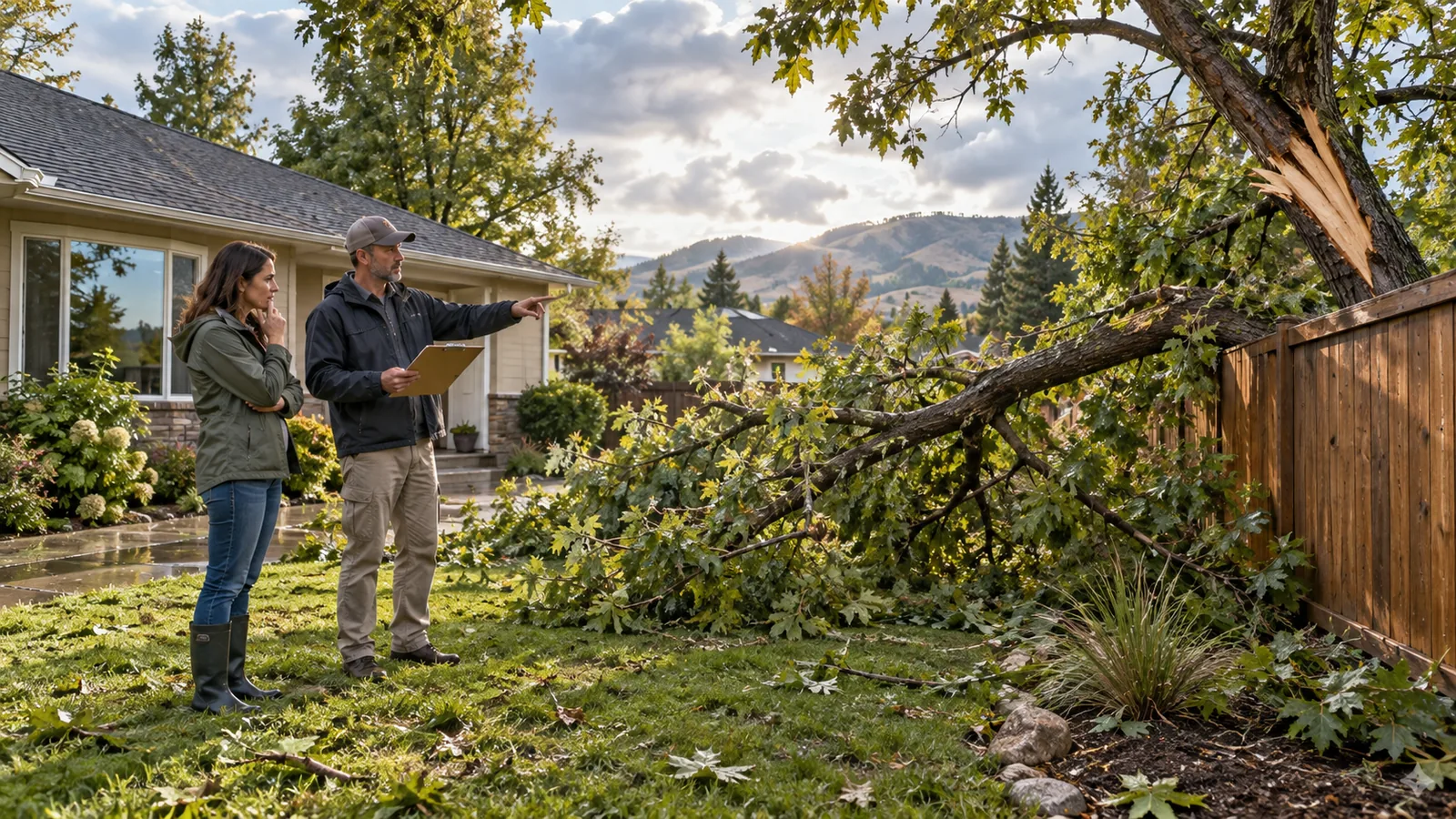
We are not insurance agents, and coverage depends entirely on the specific policy, so this is general information, not advice on your particular claim. What we can tell you, from being on a lot of these properties after a storm, is what insurers commonly ask about and how to put yourself in a better position before you call them.
Why this varies so much by policy
Homeowners insurance is written and priced individually, and tree-related coverage is one of the more inconsistent areas between insurers and even between policies from the same company. Some factors insurers commonly weigh include whether the tree struck a covered structure, whether the tree was healthy or already known to be hazardous, and whether the cause was a covered peril like wind or an excluded one. None of that can be answered in general — it comes down to the exact wording of your policy.
Common scenarios and why they differ
- A tree falls on your house, garage or fence: many policies cover removal of the portion of the tree causing the damage, plus repair to the structure, though exact limits and deductibles vary.
- A tree falls in the yard with no property damage: this is where coverage is least consistent — some policies include a debris removal provision, others do not cover it at all.
- A neighbor's tree falls on your property: this can involve both your policy and your neighbor's, especially if neglect was involved. It is a conversation for your insurer, not something to assume either way.
- A tree was already dead or known to be hazardous before it fell: insurers may look at whether the damage resulted from a failure to maintain the property, which can affect a claim.
Questions worth asking your insurer directly
- Does my policy cover tree removal when there is no structural damage?
- Is there a separate limit or sub-cap for tree and debris removal?
- What does my policy require in terms of documentation?
- Does it matter whether the tree was already dead or diseased?
- How does the deductible apply to tree-related claims specifically?
What to document before cleanup starts
Insurers generally want to see what happened before anything is moved. Where it is safe to do so:
- Photograph the fallen tree or limb from multiple angles, including how it contacted any structure.
- Photograph the resulting damage separately — roof, fence, vehicle, etc.
- Note the date and approximate time of the storm or event.
- Keep any receipts for emergency tarping or temporary repairs.
- Avoid moving debris until your insurer has confirmed what they need to see, unless safety requires it.
If the situation is actively dangerous — a tree resting on a structure, blocking an exit, or near power lines — safety comes first. Call for emergency tree removal and document what you can before and after, rather than delaying a genuinely unsafe situation for the sake of photos.
How we can help with a claim
We can provide photos, a written description of the tree and damage, and a scope of the removal and cleanup work performed, which many homeowners submit alongside their claim. We cannot tell you what your policy covers or guarantee what an adjuster will approve — that determination belongs to your insurance company. For widespread damage from a single storm, see our storm damage tree removal page, and for an isolated fallen tree, fallen tree removal.
Preventing a claim in the first place
A tree risk assessment before storm season can catch a hazardous tree while removal is a planned decision rather than an emergency, which is usually both safer and less costly than dealing with it after the fact.
Frequently asked questions
Will my premium go up if I file a tree-damage claim?
That depends on your insurer and claims history. Ask your agent directly before filing if this is a concern.
Do I need multiple estimates for an insurance claim?
Some insurers request this, others do not. Check with your adjuster about what they need.
What if the fallen tree was my neighbor's?
This is genuinely case-by-case and can involve both policies. Discuss the specifics with your insurer rather than assuming responsibility either way.
Should I call my insurer or a tree service first in an emergency?
If anyone is in danger or the situation is actively unsafe, address the safety issue first, then loop in your insurer. Many people do both calls within the same hour.