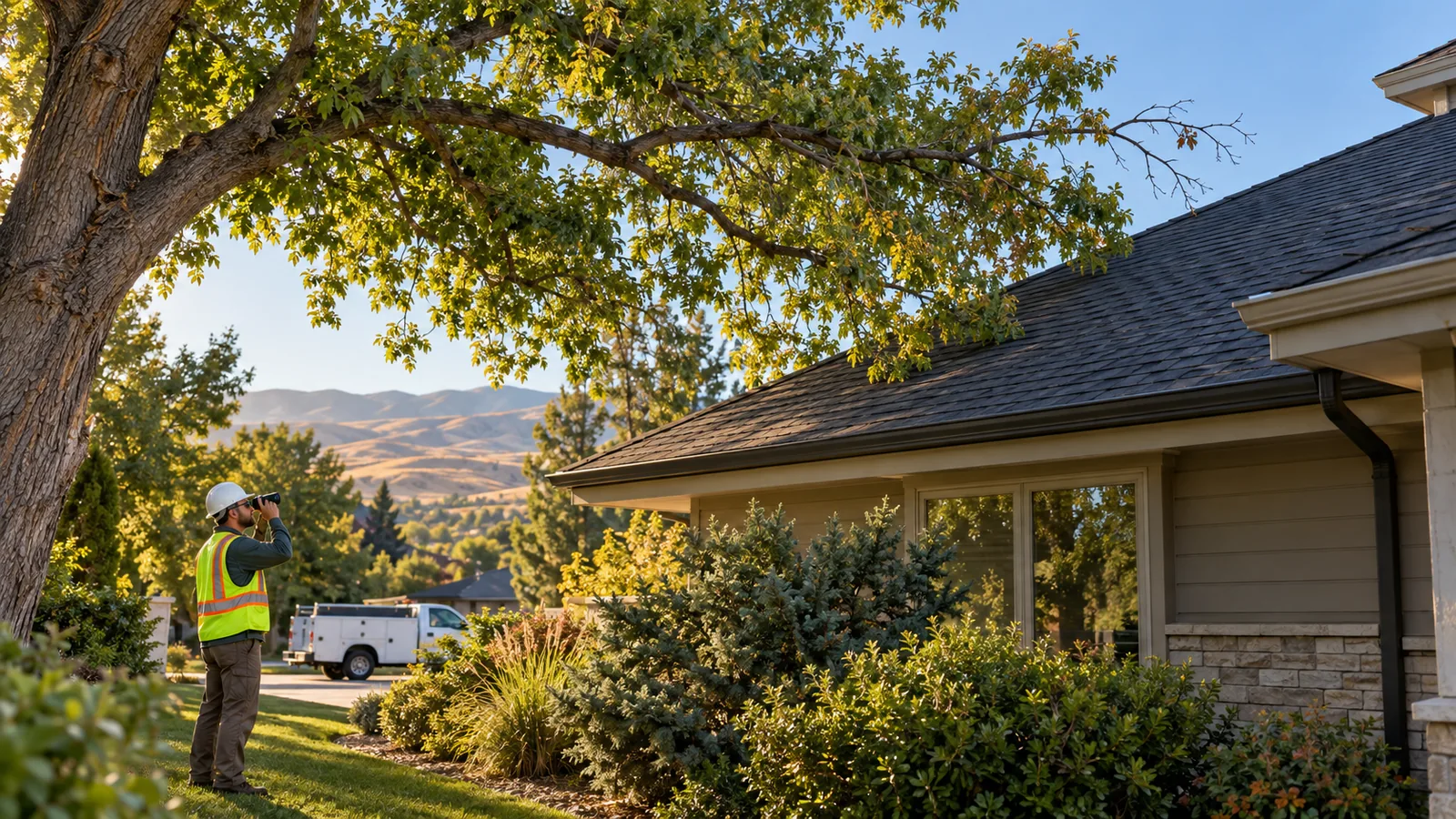
A branch brushing the roof looks minor until it scrapes through shingles, clogs a gutter, or gives squirrels and other pests a bridge straight onto your house. In Boise, where many yards have mature shade trees planted close to the home for summer cooling, roof-adjacent limbs are one of the most common things we get called about.
Why overhanging branches are a problem
It is not just about looks. Branches touching a roof create several real issues over time:
- Shingle wear: constant rubbing in the wind wears through shingle granules and shortens roof life.
- Clogged gutters: leaves and debris from overhanging limbs build up fast and can cause water to back up under roofing material.
- Moisture and moss: shaded, debris-covered roof sections stay damp longer, which can encourage moss and rot on older roofing.
- Pest access: squirrels, raccoons and insects use overhanging branches as a direct route onto the roof and into attics.
- Storm risk: a branch already resting on the roof is one ice load or wind gust away from a much bigger problem.
How much clearance is enough?
A common rule of thumb is keeping branches at least several feet clear of the roofline and chimney, more for fast-growing or heavy-limbed species. The right distance depends on the species, the branch's angle, and how much it is likely to grow before the next trim. A tree that just grazes the roof today can rest fully on it within a season or two during an active growth period.
When trimming it yourself may be reasonable
Thin, low-reaching twigs on a small ornamental tree, reachable safely from the ground with hand pruners, are a fair DIY job for many homeowners. If you can do it without a ladder on the roof or in the tree, and the branch is small enough to control as it falls, it is a reasonable weekend task.
When to call a professional instead
- The branch is too large to control safely as it comes down.
- Reaching it means climbing onto the roof or working from a ladder at height.
- The limb is tangled with others, or near power lines running to the house.
- The branch already shows cracking, splitting, or is partly broken.
- You are not confident where the cut piece will land.
A professional crew brings the right rigging to lower cut sections in a controlled way rather than letting them drop onto the roof, gutters, or landscaping below. See our tree trimming page for how that process works, or tree pruning for more selective, structure-focused cuts.
What to check after trimming
Once branches are cleared, it is worth a quick look at the roof and gutters for any scrape marks, loosened shingles, or packed-in debris the overhanging limb left behind. Catching that early is cheaper than discovering a leak months later.
Is this a one-time fix?
Usually not. A tree that reached your roofline once will likely do it again as it keeps growing, so overhanging limbs are worth checking every year or two, especially after a strong growth season or a storm that may have bent branches toward the house.
Frequently asked questions
Can overhanging branches void a roof warranty?
Some roofing warranties exclude damage from tree contact or require reasonable maintenance to stay valid. Check your specific warranty terms, or ask your roofer.
Should I remove the whole tree instead of trimming?
Usually not just for roof clearance. Selective pruning can solve the problem while keeping the tree's shade and value — removal is a separate decision based on the tree's overall health and risk.
How often should branches near the roof be checked?
Once a year is a reasonable baseline for most Boise properties, with an extra look after any major storm or heavy snow.
Will trimming hurt the tree?
Correct pruning cuts made at the right time of year and in the right place on the branch do not harm a healthy tree. Poor cuts or topping can cause lasting problems, which is one reason this work is best left to someone trained in it.