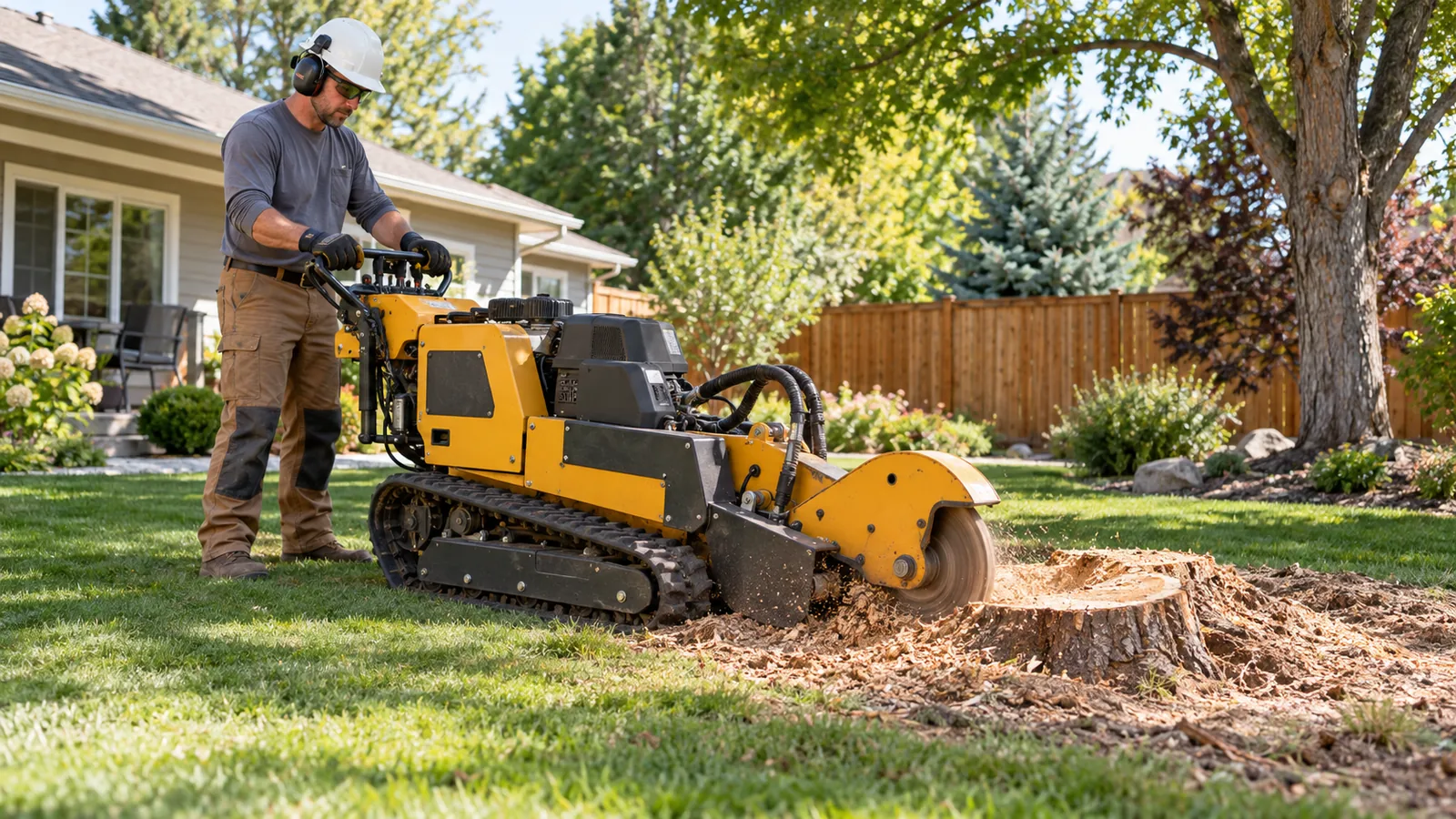
Stump grinding cost in Boise depends mostly on the stump's diameter, how easy it is to reach, how many stumps you have and how much cleanup you want. Because every yard is different, most tree companies quote after seeing photos or visiting the site. This guide explains how pricing usually works so you can compare estimates fairly.
Typical stump grinding cost in Boise
For a single stump, expect a typical range of about $300 to $900, based mainly on the size of the tree it came from. Smaller stumps from ornamental or young trees tend to fall toward the lower end; large, mature trees with wide root flares push toward the upper end or beyond it. Multiple stumps, difficult access or extra cleanup can move the price outside this range, so treat it as a starting point rather than a quote.
How stump grinding is usually priced
Many companies measure the stump's diameter at its widest point above ground and price by size. Some set a minimum charge for a single small stump, and some reduce the per-stump price when several stumps are done in one visit. Others quote a flat amount per job after reviewing photos. None of these methods is wrong; what matters is that the quote states what is included.
Factors that change the price
- Stump diameter and height: larger stumps mean more wood to grind and more time.
- Root flare and surface roots: wide roots above ground add work if you want them ground too.
- Wood type and age: dense hardwoods and very old, hard stumps can take longer than softer or fresher ones.
- Access: narrow gates, fences, slopes or a long carry from the street can limit which machine can reach the stump.
- Surroundings: stumps close to foundations, sidewalks, sprinkler lines or utilities need slower, more careful work.
- Number of stumps: multiple stumps in one visit are often more efficient than separate trips.
- Cleanup: leaving chips on site costs less than hauling them away and adding topsoil.
What to ask is included
- How far below ground level the stump will be ground.
- Whether the wood chips stay, get spread or are hauled off.
- Whether backfill or topsoil is included.
- Whether major surface roots are part of the price.
- Whether any trip or minimum charge applies.
Stump grinding or stump removal?
Grinding shreds the stump below grade and leaves the roots to decay. Full removal takes out more of the stump and root mass and usually costs more and disturbs more ground. If you plan to lay sod or plant a new tree, tell the estimator, because that changes the depth you need. Compare the two on our stump grinding and stump removal pages.
Boise-specific things to plan for
Most Treasure Valley yards have buried irrigation lines, and some have gas, electric or communication lines near a stump. Call 811 for a free utility locate before any digging or grinding, and point out sprinkler heads and valve boxes at the estimate. If the tree has only just been cut, ask whether tree removal and grinding can be quoted together so you have one visit and one plan.
How to get an accurate quote
- Take photos of each stump with something for scale, such as a tape measure.
- Note the diameter, the location and any fences, gates or slopes.
- List nearby sprinklers, lawn edging or hardscape.
- Say what you plan to do with the space afterward.
Frequently asked questions
Can I rent a grinder and do it myself?
You can, but grinders throw debris and can strike buried lines or rocks. If you rent one, get utilities located first and follow the rental company's safety guidance.
How deep is a stump ground?
Depth varies by company and by what you plan to put there. Ask for the depth in writing.
Will the stump grow back?
Some species send up new shoots from remaining roots. Grinding removes the stump itself, but sprouts can still appear and are cut back as they show up.
How long does it take?
A single small stump is usually a short visit. Large stumps, many stumps or hard access take longer.