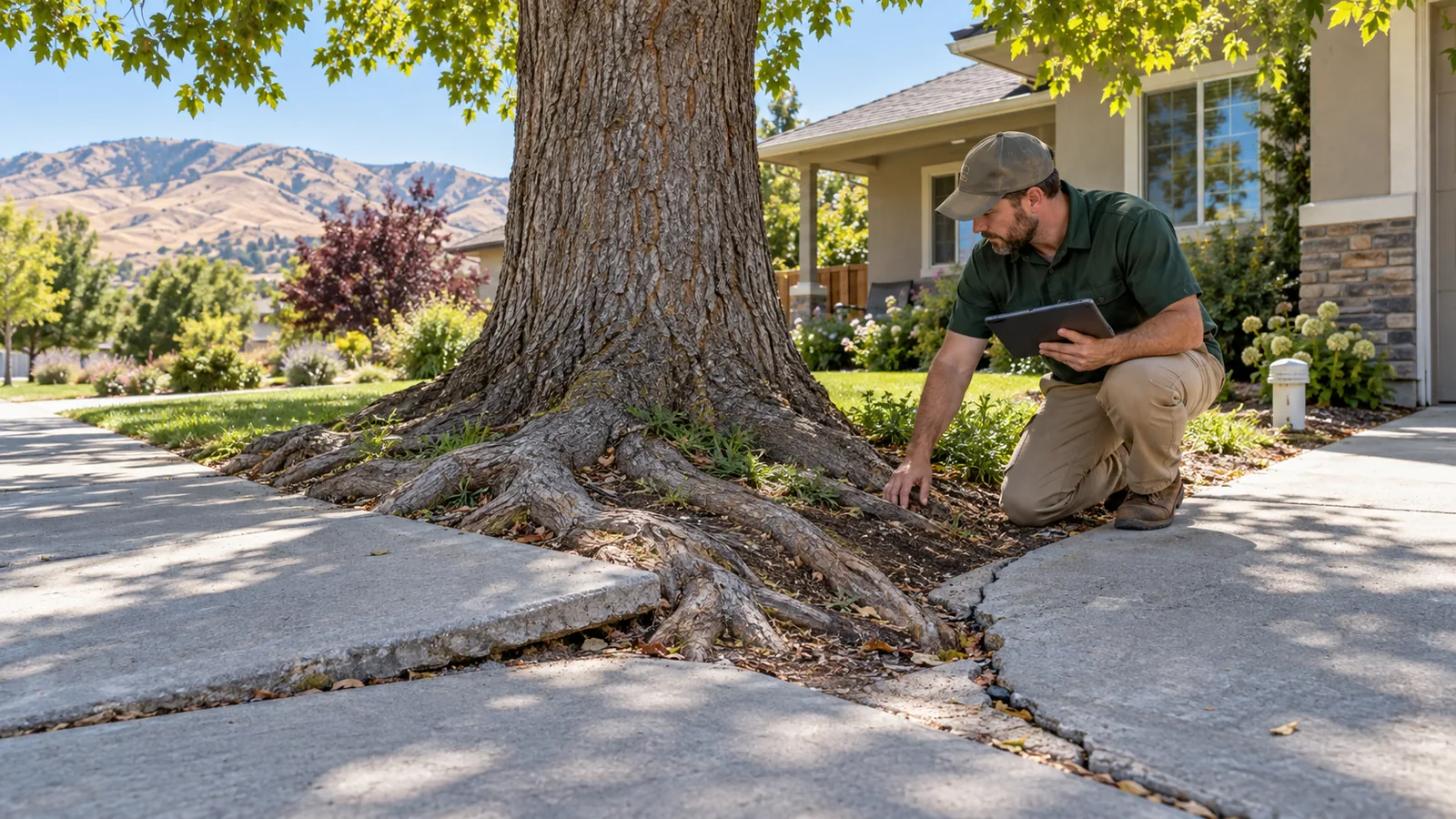
A mature tree's roots can spread two to three times wider than its canopy, often shallow and close to the surface in Boise's compact clay and rocky soils. That spread is exactly why roots so often end up lifting sidewalks, cracking driveways, or finding their way into old sewer lines.
Why roots cause this in the first place
Roots grow toward water, air and loose soil — which is exactly what sits under a sidewalk, driveway, or sewer line bedding. As a root thickens over years, it pushes up anything resting above it. The tree is not targeting the concrete or the pipe; it is simply growing into the easiest space available.
Roots and sidewalks or driveways
Lifted or cracked concrete near a mature tree is usually one or more large structural roots growing just under the slab. A few things affect how bad it gets:
- Species: some trees are known for aggressive, shallow surface roots more than others.
- Soil conditions: compacted or rocky soil, common across the Treasure Valley, pushes roots toward the surface rather than down.
- Proximity: a tree planted close to a walkway or driveway gives roots less room before they hit the hardscape.
Common fixes include grinding down a lifted slab edge, installing a root barrier to redirect future growth, or replacing the affected section of concrete with the tree's critical roots left undisturbed. Cutting a large structural root yourself to "fix" a sidewalk is risky — removing the wrong root can destabilize the tree.
Roots and sewer lines
Tree roots do not typically break into a fully sound, sealed sewer pipe. They grow toward an existing weakness — a cracked joint, an old clay pipe seam, or a small leak — drawn by the moisture seeping out. Once a fine root gets in, it can grow rapidly inside the pipe and cause a blockage.
Warning signs include slow drains, gurgling sounds, recurring backups, or unusually green, lush patches of lawn over the sewer line's path. If you suspect root intrusion, a plumber can run a camera through the line to confirm it and show exactly where the problem is before anyone digs.
What a tree service can and cannot do
We can assess surface roots affecting your hardscape, recommend whether root pruning, barriers or other adjustments make sense for the tree's health, and advise on canopy or root management to reduce future conflicts. Clearing roots already inside a sewer line, or repairing the pipe itself, is plumbing and excavation work outside a tree service's scope — that said, understanding whether a specific tree is the likely source is something we can help evaluate alongside your plumber.
Should the tree come out?
Not necessarily. Removing a mature tree because of root conflicts is a bigger decision than it first appears — the roots already in place do not disappear immediately after removal, and you lose the tree's shade and value in the process. A tree risk assessment can help weigh whether management options are realistic before removal becomes the only answer. If removal is the right call, see our tree removal page for what that process involves, including stump grinding to help clear the area afterward.
Preventing this with new plantings
If you are planting a new tree, keep mature root spread in mind: choose a species with known root behavior appropriate for the spot, and give it real distance from driveways, walkways, foundations and sewer lines before it is fully grown, not just where it looks right today. Our tree planting page has more on choosing the right tree for the space.
Frequently asked questions
Can I just cut the root causing the problem?
Sometimes a smaller surface root can be pruned, but cutting a large structural root without an assessment risks the tree's stability. Have it evaluated first.
How do I know if it's really tree roots in my sewer line?
A plumber's camera inspection is the reliable way to confirm it and see exactly where the intrusion is.
Will a root barrier stop existing damage?
A barrier redirects future root growth away from a structure; it does not reverse damage already done, though it can prevent the same spot from being re-invaded after a repair.
Does homeowners insurance cover root damage to pipes or concrete?
Coverage varies significantly by policy and cause. Check directly with your insurer about what your specific policy covers.