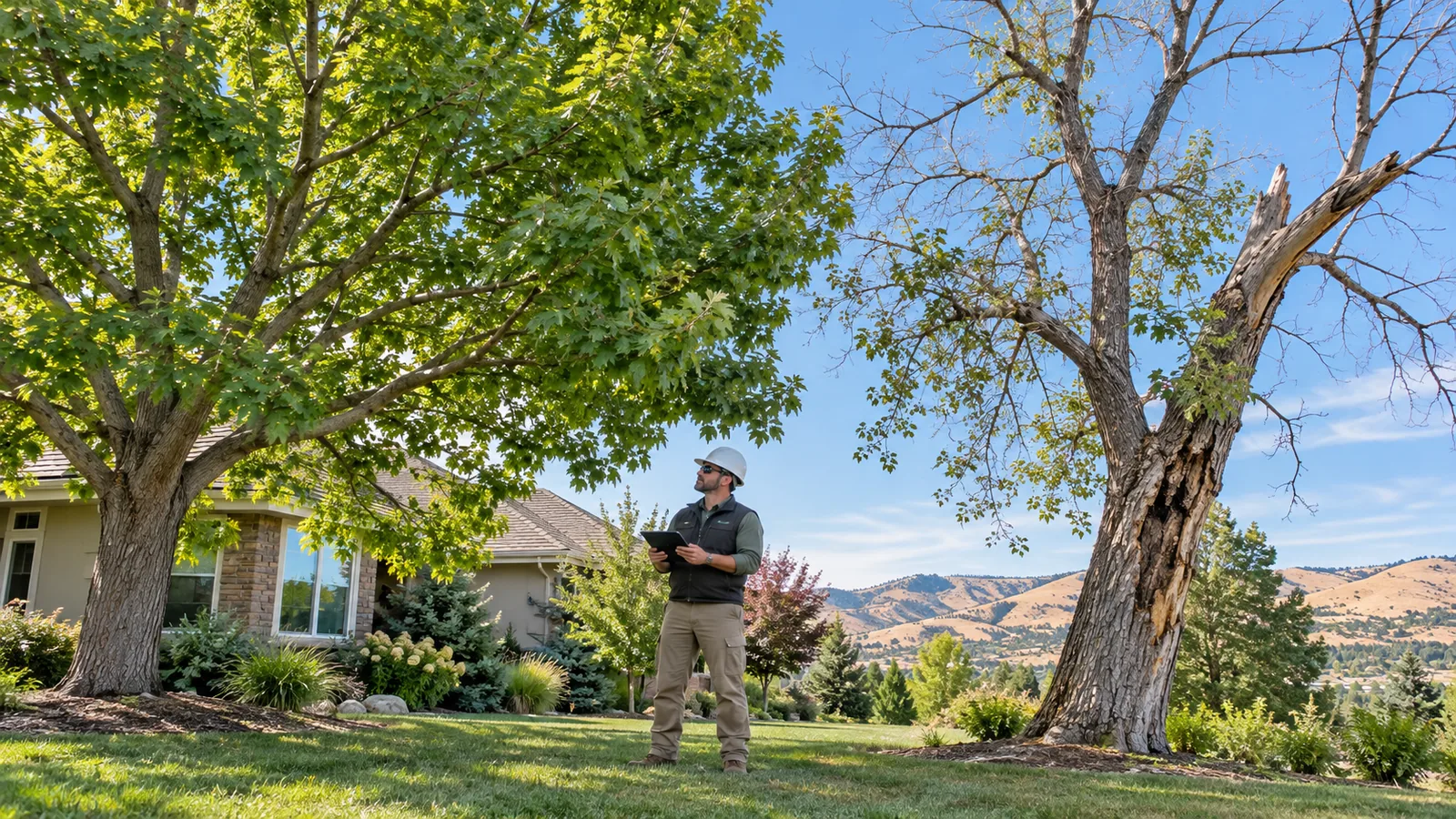
This is one of the most common questions we hear: can this tree be saved with some trimming, or does it need to come out entirely? The honest answer depends on the specific tree, not a general rule, but there is a useful way to think through it before you call anyone.
Start with the core question
Trimming fixes problems on top of a sound structure. Removal is the answer when the structure itself is the problem. Ask: is the issue limited to specific branches, or does it run through the trunk and root system?
Signs trimming is likely the right call
- Deadwood or a few declining branches on an otherwise healthy tree.
- Branches overhanging a roof, driveway or walkway that need clearance.
- Crossing or rubbing branches that could develop wounds over time.
- A canopy that has become dense or unbalanced and needs thinning for light and airflow.
- A tree that is simply larger than you want in that spot, where size reduction can help.
Trimming in these cases improves the tree's health and appearance and reduces risk without losing the shade, privacy or value a mature tree provides. See our tree trimming and tree pruning pages for what each involves.
Signs removal is likely the better option
- The tree is dead or in advanced decline across most of the canopy — see our guide on telling a dead tree from a dormant one.
- Significant trunk decay, large cavities, or fungal conks suggesting internal rot.
- A severe or worsening lean, especially with visible soil heaving at the base.
- A major structural defect at a main fork, such as a deep crack or included bark.
- Root damage from construction, grade changes, or disease that trimming cannot address.
- The tree conflicts with something that cannot reasonably be worked around — close to a foundation, lifting a driveway, or causing ongoing root problems.
In these situations, trimming does not solve the underlying problem and can sometimes mask it temporarily while the real risk continues to build. Our tree removal page covers that process, including stump grinding afterward.
Cases that are genuinely close calls
Some trees sit in a gray area: a Siberian elm with a weak fork but otherwise decent health, or a tree with one significant defect but years of life left in it. These are exactly the cases where an on-site look matters more than a general rule — sometimes cabling and bracing can support a weak union rather than requiring removal, and sometimes it cannot.
Think about what you want from the tree
Beyond health and risk, it is worth being honest about whether the tree is still doing what you want — shade in the right place, privacy, or simply being part of the yard you like. A tree that is structurally fine but outgrowing its spot might call for a size-reduction trim rather than removal, while a declining tree that was never quite right for its location might be a reasonable one to let go of and replace with something better suited.
Getting an honest assessment
A tree risk assessment looks at the whole picture — trunk, canopy, root zone and surroundings — rather than just the symptom that prompted the call, so you get a recommendation based on the tree's actual condition rather than a guess from the curb.
Frequently asked questions
Can trimming ever make a tree more dangerous?
Poor pruning, such as topping or removing too much live canopy at once, can weaken a tree and trigger weak regrowth. Done correctly, pruning should reduce risk, not add to it.
Is removal always more expensive than trimming?
Usually yes for a single visit, but recurring trimming on a tree that ultimately needs removal can add up over time without solving the underlying issue.
Can I get a second opinion before deciding?
Yes, and for a significant or costly decision like full removal, a second assessment is a reasonable step.
What if I just want the tree smaller, not removed?
That is a size-reduction trim, which is different from removal and often achievable without taking the whole tree out, depending on the species and how much reduction is needed.