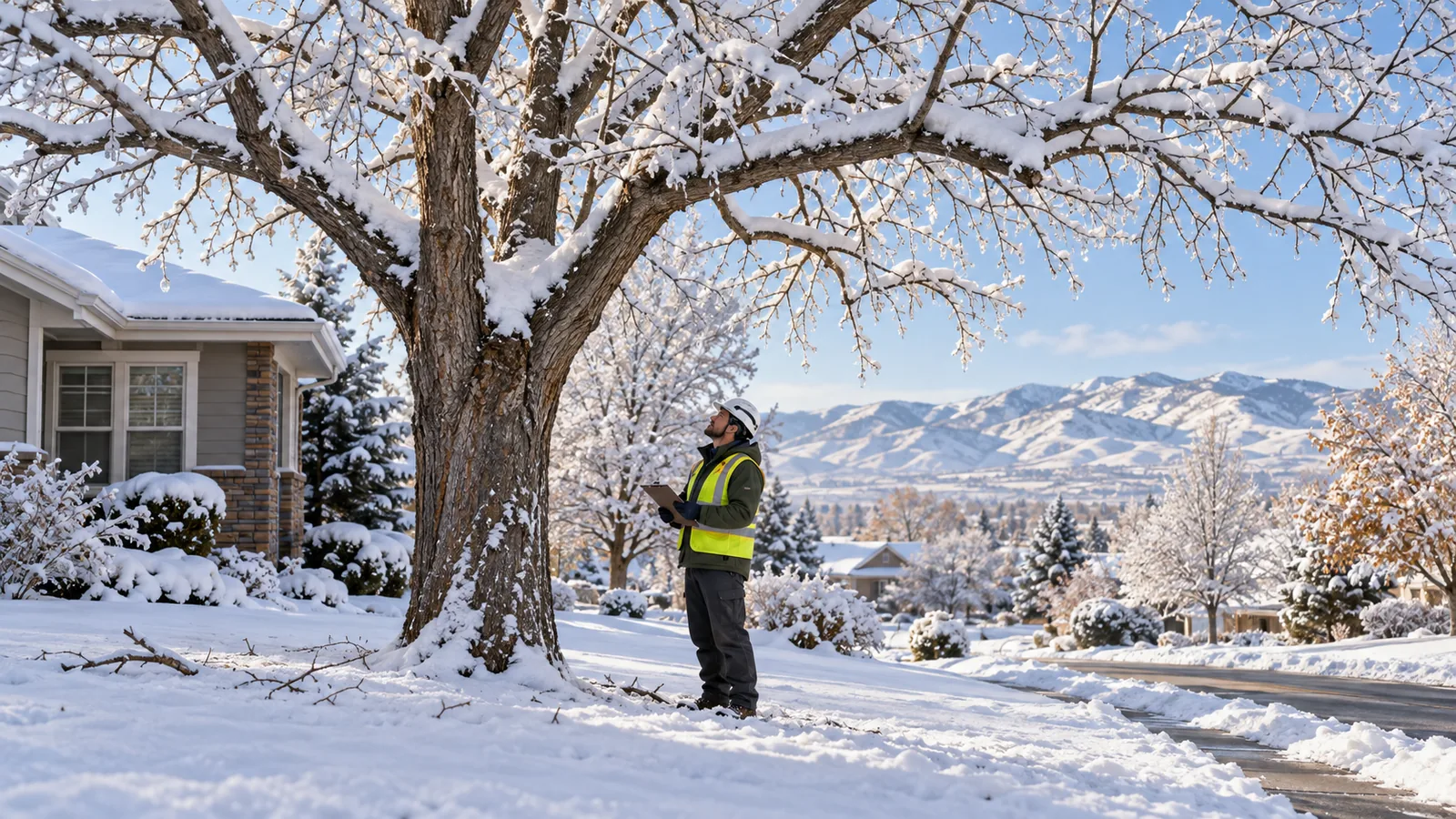
Boise winters swing between dry cold snaps and sudden heavy, wet snow, and both can stress a tree that looked fine in October. A little preparation before winter, and knowing what to watch during a storm, can be the difference between a close call and a call to us after a limb comes down.
Why Boise winters are hard on trees
The Treasure Valley gets a mix of dry, bitter cold snaps and occasional wet, heavy snow that clings to branches far more than light powder does. Add in wind events moving down from the foothills, and a tree with a weak fork or existing deadwood is carrying risk it did not have in summer. Trees already stressed from Boise's hot, dry summers can be more vulnerable going into a hard freeze.
Before winter arrives: a quick checklist
- Remove deadwood. Dead branches do not flex with wind or snow load the way live wood does, and they are the first to fail.
- Look at weak forks and overloaded limbs. A tree like a Siberian elm with a tight, included-bark fork is more likely to split under snow weight.
- Water before a hard freeze if fall has been dry. A well-hydrated tree going into winter handles cold stress better than a drought-stressed one.
- Hold off on late-season fertilizing. Pushing new growth right before a freeze can leave tender tissue exposed to cold damage.
- Clear gutters and check for branches already resting on the roofline. Snow load can push a marginal branch the rest of the way down.
During a snow or ice event: what to watch for
Keep an eye on branches that are bending noticeably more than their neighbors, any new cracking sound, or limbs sagging low enough to touch a structure, vehicle or power line. Do not try to shake or knock snow off branches yourself — ice-coated limbs are brittle and can snap suddenly, and a falling limb is far more dangerous than the snow sitting on it. If a branch is resting on a power line, stay back and contact the utility company rather than the tree.
After the storm: assessing damage safely
Once conditions are safe, walk the property and look (from a distance) for new cracks at a fork, bark torn away from the trunk, a lean that was not there before, or any limb caught up in the canopy rather than on the ground. Photograph damage for your records before anything is moved. Do not climb a storm-damaged tree or attempt to cut a hung-up limb yourself — the stored tension in a caught branch makes it genuinely dangerous. If a limb is down on a structure, vehicle or walkway, or a tree is leaning toward your home, treat it as an emergency and call for emergency tree removal. For damage that is concerning but not actively dangerous, a tree risk assessment is the right next step, and widespread storm damage is covered on our storm damage tree removal page.
Is winter actually a good time to prune?
For many species, yes. With leaves down, it is easier to see a tree's structure, and cuts made during dormancy give the tree a head start healing before spring growth resumes. If you have been putting off trimming a tree with deadwood or crossing limbs, late winter is often a good window — see our tree pruning page for what that involves.
Frequently asked questions
Should I wrap my tree trunks for winter?
Most established trees in Boise do not need trunk wrap. It is sometimes used on young, thin-barked trees to reduce sunscald risk on their south or west side — ask an arborist if that applies to a specific young tree on your property.
Can I knock snow off branches myself?
It is safer to leave heavily loaded branches alone. Brushing light, fresh snow off low branches you can reach without a ladder is generally fine; anything icy, high, or over a walkway is not worth the risk.
Is tree removal possible in winter?
Yes, and frozen or snow-covered ground can sometimes make a site easier on your lawn than removal during a wet spring.
When should I call for emergency help?
Any time a limb is down on a structure, vehicle, or walkway, or a tree is leaning in a new way toward something it could hit.